Here is the sentence that should decide your purchase, and almost no pitcher review says it: a filter is only proven to remove what it has been certified to remove. Everything else on the box — “reduces 365+ contaminants,” “tested to NSF standards,” “filters PFAS” — may be true, may be a one-off lab report, and is not the same thing.
Federal regulators draw exactly this line. When a water utility replaces a lead service line, federal rule 40 CFR 141.84 requires it to hand the resident “a pitcher filter or point-of-use device certified by an American National Standards Institute accredited certifier to reduce lead” — not a filter that claims to, one that is certified to.
This 2026 rewrite checks every pitcher below against that standard, and names the ones that don’t meet it.
Our Top Water Filter Pitchers
What Certification Actually Means
There are three accredited certifiers in the US and they carry equal weight: NSF International, WQA (Gold Seal) and IAPMO R&T. What matters is which standard a product is certified against:
- NSF/ANSI 42 — aesthetic only. Chlorine, taste, odor, sediment. Says nothing about health.
- NSF/ANSI 53 — health effects. This is the one that covers lead, cysts, VOCs, mercury and PFOA/PFOS.
- NSF/ANSI 401 — emerging contaminants: 15 pharmaceuticals and personal-care compounds, plus microplastics.
- NSF/ANSI 372 — lead-free housing material. It means the plastic doesn’t leach lead into your water. It does not mean the filter removes lead.
That last one is the trick. A brand can be genuinely “NSF certified to 42 and 372,” print the NSF logo, and place it beside lead and PFAS claims it has never certified. Watch for the standard number, not the logo.
The weaker formula to recognize: “independently tested to NSF/ANSI 53 standards” or “meets EPA and NSF standards.” That’s a one-time unaudited lab report with no public listing and no ongoing surveillance. Real certification means unannounced plant audits and a searchable entry.
How to check any filter yourself in 15 seconds
Search NSF’s own database: info.nsf.org/Certified/DWTU, and search by trade name. WQA’s listings are at find.wqa.org and IAPMO’s at pld.iapmo.org.
One caution, because we got caught by it ourselves: absence from NSF’s database is not proof of nothing. Brita’s pitcher filters don’t appear there at all — because Brita certifies through IAPMO and WQA instead. Check all three before concluding a brand is uncertified.
The Best Water Filter Pitchers in 2026
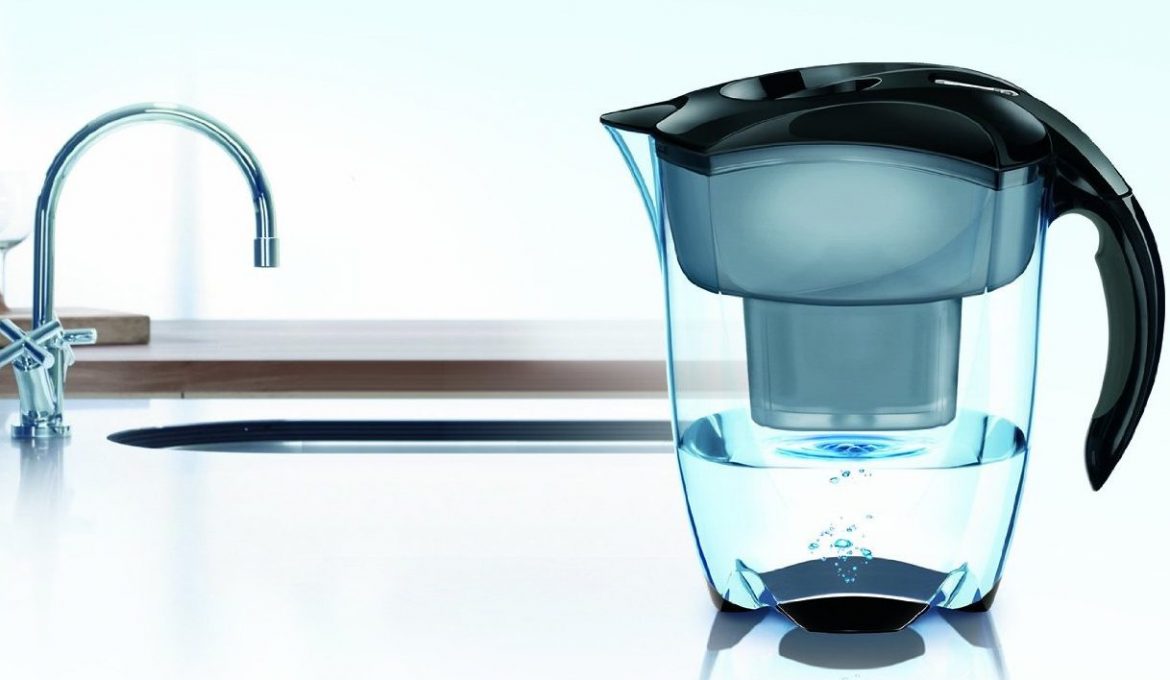
1. Brita Tahoe 10-Cup with Elite Filter — Best Overall
Certified by IAPMO, NSF and WQA — against standards 42, 53 and 401. That triple listing is the most thoroughly documented certification in the pitcher aisle, and the measured reductions on Brita’s published performance sheet back it: lead 99.5%, mercury 95.5%, cadmium 96.9%, asbestos over 99%, chlorine 97.4%, and microplastics 99.6% along with the 401 pharmaceutical list.
The Elite filter lasts 120 gallons or about six months, which works out to roughly 17 cents a gallon — the best running cost of any certified pitcher here. The pitcher runs about $41.99 and filters cost $19.99, or $32.99 for two.
Specifications:
- Capacity: 10 cups
- Filter life: 120 gallons / ~6 months
- Certified: NSF/ANSI 42, 53, 401 (IAPMO, NSF, WQA)
PROS:
- Triple-certified, including lead under Standard 53
- Cheapest cost per gallon among certified pitchers
- Certified for microplastics and pharmaceuticals
CONS:
- No PFAS claim at all — Brita’s own performance sheet has no PFAS line
- Cold water only (max 29 °C)
Conclusion
If your concern is lead, chlorine, microplastics and everyday water quality, this is the sensible buy and the cheapest to run. If your concern is specifically PFAS, keep reading — Brita is not your filter.
2. ZeroWater 10-Cup — Best for Lead and PFAS
The only mainstream pitcher we found with certified PFOA/PFOS reduction. Certified by IAPMO against NSF/ANSI 53, with published reductions of PFOA/PFOS 94.9%, lead 99.7%, hexavalent chromium 99.6% and mercury 96.7%. Its five-stage ion exchange strips essentially all dissolved solids, which is why it ships with a TDS meter that reads zero on fresh water.
Now the catch, and it’s a big one: the rated filter life is 15 gallons. Not 120 — fifteen. That puts running costs at roughly 91 cents to $1.33 per gallon, five to eight times what the Brita costs. The same ion exchange that removes everything is what clogs the filter fast, and it makes the flow slow.
Specifications:
- Capacity: 10 cups (52-cup dispenser also available, ~$64.99)
- Filter life: 15 gallons
- Certified: NSF/ANSI 53 and 42 (IAPMO) — includes PFOA/PFOS and lead
PROS:
- Certified PFOA/PFOS reduction — genuinely rare
- Highest certified lead reduction here
- TDS meter included
CONS:
- 15-gallon filter life — by far the most expensive to run
- Slow flow
Conclusion
Buy it if PFAS or lead is your actual reason for filtering, and buy filters in the 12-pack to soften the cost. For general taste-and-chlorine duty it’s an expensive way to get there.
3. Brita Denali 6-Cup — Best Budget
Twenty-three dollars for the pitcher and $7.99 for a filter, the cheapest replacement in the category. It’s certified by WQA, and the plain carbon-and-ion-exchange Original filter pours faster than the denser Elite.
Be clear about what you’re getting: the Original filter does not carry the Elite’s lead certification. This is a chlorine, taste and odor filter. For city water that already tests clean and a household that just wants better-tasting water in the fridge door, that’s the honest job description — and it’s the cheapest way to do it.
Specifications:
- Capacity: 6 cups
- Filter: Brita Original, ~$7.99
- Certified: NSF/ANSI standards via WQA (aesthetic — not lead)
PROS:
- Cheapest filters in the category
- Fast pour
- Fits narrow fridge shelves
CONS:
- No lead certification — don’t buy it for that
- Small capacity
Conclusion
The right pitcher for taste, the wrong pitcher for contaminants. If you’re on a lead service line, spend the extra and get the Elite.
4. ZeroWater 52-Cup Dispenser — Largest Capacity
Same certified filter and the same five-stage performance as the 10-cup, in a 3.25-gallon dispenser with a spigot for the counter or a fridge shelf, around $64.99. The built-in TDS meter reads out the water before and after.
The honest arithmetic: the bigger reservoir doesn’t extend the filter — it’s the same 15-gallon cartridge, and a big household empties it faster. Budget for filters accordingly, or treat this as the drinking-water station and let the tap handle cooking.
Specifications:
- Capacity: 52 cups (~3.25 gallons)
- Filter life: 15 gallons
- Certified: NSF/ANSI 53 and 42 (IAPMO)
PROS:
- Certified for lead and PFOA/PFOS
- Spigot dispensing — no lifting a full pitcher
CONS:
- Filter cost scales badly with capacity
- Heavy when full
Conclusion
The right answer for a family that wants certified PFAS and lead reduction at the counter, provided you go in knowing the filter budget.
5. Clearly Filtered — The Cautionary Example
We’re including this one because it teaches the lesson better than any explanation. Clearly Filtered advertises removal of “365+ contaminants” including lead, PFAS, fluoride and arsenic, at $99 for the pitcher and $58.50 for a 100-gallon filter.
Read their certification line carefully: “NSF Certified to NSF/ANSI Standards 42 & 372.” That is chlorine and taste, plus lead-free housing plastic. The lead, PFAS, fluoride and arsenic claims rest entirely on “independently tested by third-party labs.” The NSF logo on the page is real; it just isn’t certifying the claims you’re reading it next to.
The filter may well perform as described — we have no evidence it doesn’t. But at $99 plus $58.50 a cartridge you are paying premium prices for lab reports, while ZeroWater sells certified PFOA/PFOS reduction for less.
Conclusion
A useful object lesson in reading the standard number instead of the logo. The same pattern applies to Epic Water Filters — whose NSF listing explicitly reads “certified for material safety requirements only” — and to LifeStraw Home, which claims PFAS and lead reduction while citing no NSF standard at all.
Why This Matters More in 2026
Two federal developments changed the stakes since we last updated this guide.
PFAS limits exist now, and they’re contested. In April 2024 the EPA set the first national drinking-water limits for PFAS: 4 parts per trillion for PFOA and PFOS, 10 ppt for three others, with utilities required to comply by April 2029. In January 2026 a federal appeals court rejected the EPA’s attempt to partially vacate that rule. In May 2026 the agency proposed pushing compliance to 2031 and rescinding four of the six limits — as of this writing neither proposal has been finalized, so all six limits still stand. Either way, the rule only covers public water systems, not private wells, and only six of thousands of PFAS compounds.
Lead rules tightened. The Lead and Copper Rule Improvements took effect in December 2024, lowering the action level from 15 to 10 parts per billion, requiring compliance by November 2027 and replacement of lead service lines within ten years after that. EPA’s own estimates of how many lead lines remain range from about 4 million to 9 million. And here’s the practical part for anyone whose street is on the replacement list: disturbing a lead line spikes lead at the tap for weeks afterward, which is exactly why the federal rule requires the utility to hand you a certified filter and six months of cartridges.
Water Filter Pitcher FAQ
Do I need a filter if my city water passes its tests?
Compliance is measured at the system, not at your faucet. Lead in particular comes from the service line and household plumbing, downstream of everything the utility tests. If your home predates 1986 or your street is scheduled for lead line replacement, a certified filter is worth having regardless of what the annual water quality report says.
How do I know if my water has lead?
Ask your utility for your service line material — under the current federal rule they’re required to maintain an inventory. Home test kits exist, but a certified lab test is the reliable answer if you get an ambiguous result.
Does any pitcher remove fluoride?
Several claim to. None that we could find are certified for it under NSF/ANSI 53. If fluoride removal is your goal, reverse osmosis is the technology that’s actually certified to do it.
Why is my filter so slow?
Usually it’s working as designed: the denser the media, the slower the flow. Ion exchange resins that strip dissolved solids are slowest of all. A sudden slowdown near the end of a cartridge’s rated life means it’s clogged and due for replacement.
Can I put hot water through it?
No. Most pitcher filters cap out around 29 °C. Hot water can damage the media and release what it has captured.
Summary
For most households the Brita Tahoe with an Elite filter is the right buy: genuinely triple-certified, certified for lead and microplastics, and the cheapest to run at about 17 cents a gallon. If PFAS is your specific concern, the ZeroWater is the only mainstream pitcher with certified PFOA/PFOS reduction — accept the 15-gallon filter life as the price of admission. On a budget, the Brita Denali makes water taste better for $8 a filter, and makes no promises beyond that.
Whatever you buy, check the standard number rather than the logo. Certification under NSF/ANSI 53 is a claim someone audits. Everything else is a claim someone printed.